
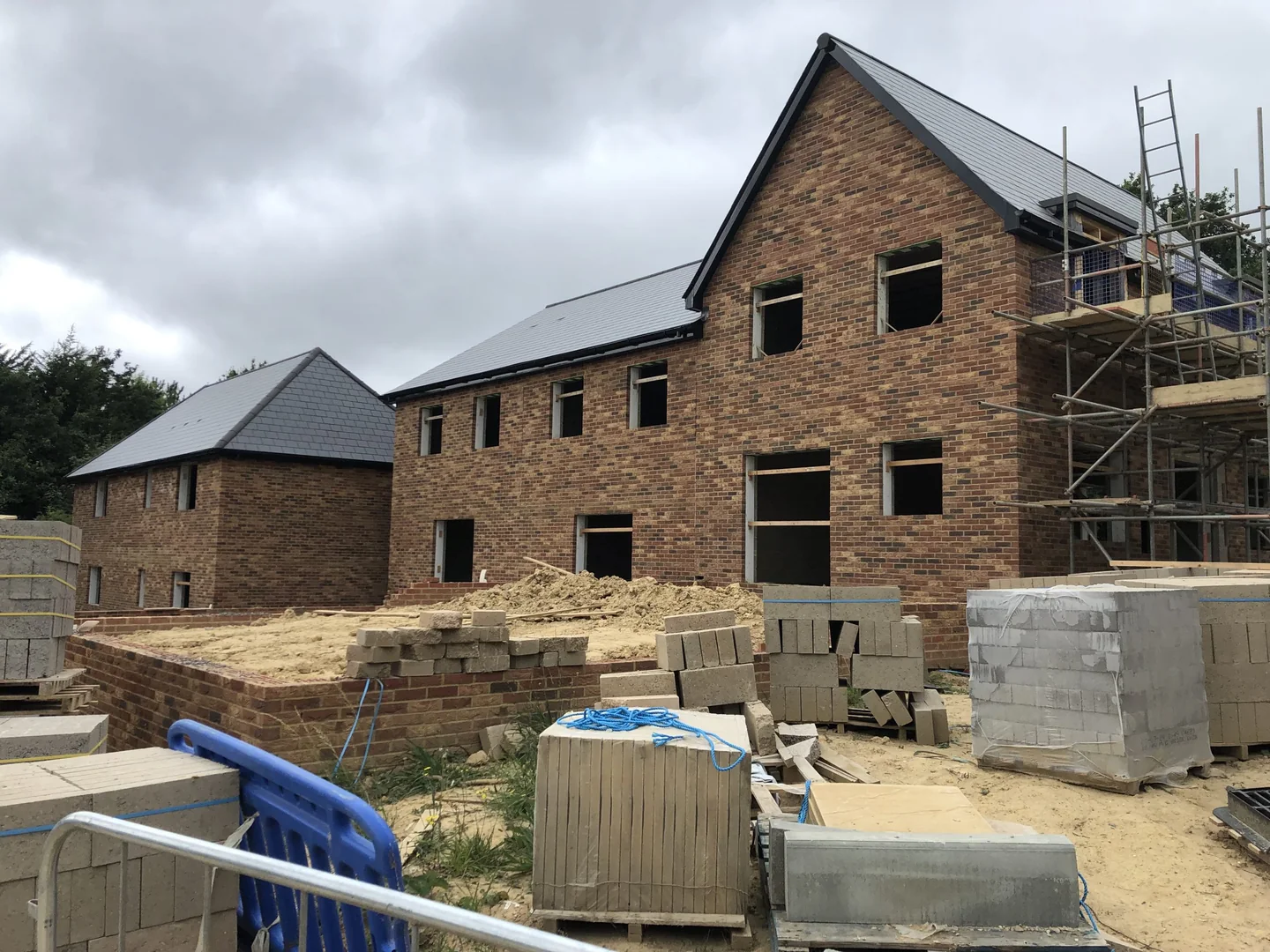
A development appraisal prepared when planning permission is granted is a forecast.
Construction happens in the real world.
Build costs change. Finance costs move. Programmes extend. Sales values fluctuate. Abnormal costs emerge and, increasingly, developers can reach the later stages of a project only to discover that the affordable housing units secured through the Section 106 agreement cannot be sold to a Registered Provider on the terms originally anticipated.
The commercial consequences can be substantial.
At Bartons Planning & Development Consultancy, we assist developers in reviewing S106 viability during construction and identifying whether affordable housing requirements, tenure arrangements, commuted sums or payment mechanisms can legitimately be varied to enable the development to remain deliverable.
The important point is to act early and build an evidence-based case.
What Happens When the Original S106 No Longer Works?
An executed S106 agreement is a legally binding planning obligation. A deterioration in profitability does not, by itself, simply remove those obligations.
However, that does not necessarily mean the original agreement can never change.
Depending upon the drafting of the S106, the circumstances of the development and agreement of the LPA, potential routes can include:
affordable housing cascade provisions;
changes to affordable housing tenure;
alternative Registered Provider arrangements;
payments in lieu where permitted;
re-phasing or deferral of contributions;
revised trigger points;
a deed of variation; or
where applicable, the statutory mechanisms available for modification of planning obligations.
The first task is therefore not simply to rerun the development appraisal.
It is to understand exactly what the existing S106 says and what flexibility already exists within it.
The Growing Problem of Unsold S106 Affordable Housing
One of the most significant issues currently affecting residential developers is the market for S106 affordable housing.
A scheme may have been appraised on the assumption that a Registered Provider would acquire the affordable units at a certain value.
By the time those properties are approaching construction or completion, the reality can be very different.
Developers may find that:
- there is limited or no Registered Provider appetite;
- offers are substantially below the values assumed in the original appraisal;
- the required specification differs from the units being delivered;
- the proposed tenure is unattractive to the market; or
- no suitable Registered Provider is prepared to acquire the homes at all.
This is no longer simply a theoretical viability issue. In 2026 the Government expressly recognised the problem of uncontracted and unsold S106 homes and introduced a time-limited framework encouraging LPAs, in qualifying circumstances, to use existing powers to renegotiate affordable housing tenure where reasonable efforts to secure an RP purchaser have failed.
That route is limited to qualifying homes uploaded to the Homes England Clearing Service by 1 June 2026 and due for completion by 1 December 2027. The upload window has closed for new cases, although existing eligible submissions may still be considered. Other S106 variation routes must be assessed on their own facts. See the Government’s Section 106 delivery policy statement.
A Low Registered Provider Offer Can Fundamentally Change Viability
The affordable housing value used within the original development appraisal can be critical.
If the original viability assumptions anticipated a receipt of, for example, several million pounds from an RP and the actual offers subsequently received are substantially lower, the difference directly affects project revenue.
At the same time, the development may have experienced increased construction costs, additional finance, delays or abnormal expenditure.
The combined effect can significantly reduce or eliminate the developer's expected return.
This is where a fresh viability assessment can become commercially important.
Bartons can compare the original appraisal with the current development position, identifying precisely what has changed and quantifying the financial impact.
The purpose is to demonstrate the problem rather than merely assert that one exists.
Evidence Is Critical
Where a developer is seeking changes to affordable housing obligations, the quality of the evidence is often the difference between a credible negotiation and an unsuccessful request.
Bartons will typically consider matters such as:
the original viability appraisal;
the assumptions underpinning the S106;
actual construction expenditure;
revised cost-to-complete information;
finance costs;
abnormal costs encountered during development;
current market sales evidence;
affordable housing values;
Registered Provider offers;
correspondence with potential RPs;
evidence of marketing and reasonable endeavours;
current development programme;
projected developer return; and
the precise wording of the S106 agreement.
This creates a clear audit trail showing how the development moved from the original viability position to its current position.
Can Affordable Housing Be Changed to Market Housing?
Potentially – but it depends upon the agreement, planning policy and the LPA accepting an appropriate mechanism.
The first solution may be an alternative affordable tenure that is more attractive to Registered Providers.
Where that cannot resolve the problem, other options may need to be considered.
For qualifying legacy S106 units under that time-limited route, Government policy recognises that, after other affordable housing or discounted market tenure options have been explored, private market rent or sale may potentially be considered, accompanied by equivalent affordable provision elsewhere or, where that is not feasible, a financial payment in lieu.
This is precisely why developers should not assume that an inability to secure an RP means that units must simply remain empty indefinitely.
There may be another route.
What About an Affordable Housing Payment in Lieu?
Some S106 agreements already contain provisions allowing onsite affordable housing to be substituted with an affordable housing payment in lieu in specified circumstances.
Where those provisions exist, the wording needs to be examined carefully.
The contribution may be determined by a fixed formula, valuation mechanism or further agreement with the LPA.
Where there is scope for negotiation, Bartons can assess the financial effect of the proposed payment and establish what level the development can support.
However, this is not simply a question of asking the authority for an arbitrary discount.
Some authorities expressly seek a financially neutral position between onsite provision and a payment in lieu.
The strongest approach is therefore to demonstrate the actual economics of the development, identify the precise contractual mechanism available and negotiate from evidence.
Where the proposed payment would itself render the development undeliverable, that position needs to be clearly demonstrated through an updated viability appraisal.
The Role of a Deed of Variation
Where the existing S106 cannot accommodate the necessary change, a deed of variation may provide the appropriate mechanism.
This could potentially amend:
affordable housing tenure;
affordable housing numbers;
timing requirements;
payment arrangements;
contribution triggers;
delivery mechanisms; or
other provisions preventing the scheme from progressing.
The authority will need a proper justification for agreeing the change.
That makes the viability evidence and negotiation strategy particularly important.
Simply explaining that the development has become more expensive is unlikely to be enough. The developer needs to establish what has changed, why it could not reasonably be absorbed and how the proposed variation enables the development to continue.
Bartons' Approach to S106 Viability During Construction
Bartons combines financial appraisal with planning and S106 negotiation.
We begin by reviewing the existing obligation and establishing the commercial problem.
We then update the financial position, test alternative affordable housing scenarios and identify the solution that gives the strongest prospect of being acceptable to both the developer and the LPA.
That might involve:
renegotiating affordable housing tenure;
testing alternative RP proposals;
reviewing an affordable housing payment in lieu;
restructuring contribution payments;
negotiating revised triggers;
supporting a deed of variation; or
preparing an updated Financial Viability Assessment.
Our objective is to protect development delivery while achieving a commercially sustainable outcome.
For a developer facing a substantial affordable housing shortfall, a successful viability negotiation can potentially represent hundreds of thousands or even millions of pounds of difference to the project appraisal.
Conclusion: Do Not Wait Until the Development Stalls
Where an S106 obligation is threatening development viability, the worst strategy is often to leave the problem until units are complete, finance costs are continuing and contractual deadlines are approaching.
The earlier the issue is identified, the more options remain available.
Registered Provider engagement can be evidenced.
Alternative tenures can be explored.
Development viability can be updated.
The S106 can be reviewed.
The LPA can be approached with a properly structured solution rather than simply presented with a problem.
Bartons assists developers experiencing precisely these issues.
If your affordable housing units cannot secure an RP purchaser, the offers received are materially below the values assumed in your appraisal, or an S106 payment is threatening the viability of your development, contact Bartons before accepting the financial impact. There may be scope to restructure the obligation and protect the viability of the scheme.